
By Patrick Duncan | Commercial Safe & Lock
Table Of Contents
Table of Contents
- What Warning Signs Point to Access Control Faults?
- What Does Access Control Repair in St. Louis Involve?
- What Causes Access Control Systems to Fail?
- Is the Code Itself Causing Trouble?
- What Should You Check First?
- What Order Should Repairs Follow?
- Why Does the Egress Check Come First?
- How Do You Verify the Repair?
- Which Repair Option Fits Your Access System?
- Ready to Fix It Right the First Time
- Frequently Asked Questions
Key Takeaways
Key Takeaways
- A failing access control system typically surfaces as slow card readers, doors that never fully latch after hours, and repeating controller errors, which trace back to hardware, wiring, or programming rather than a single broken part.
- Work through the whole entry chain, from fobs and readers to power supply and controller, before approving hardware replacement on a malfunctioning system.
- Tell your security provider when staff resort to holding doors open, because that habit cancels the protection the system was installed to provide.
- Most access control faults develop gradually from worn strikes, weak power supplies, damaged wiring, and silent credential or firmware changes, so a documented signal-path check beats replacing the first part that looks broken.
What Warning Signs Point to Access Control Faults?
Access control repair in St. Louis refers to diagnosing and restoring door hardware, card and keypad readers, controllers, electric locks, and the software that governs them, so a commercial facility can lock, unlock, and log entry exactly as designed. When one component fails, the whole entry point loses its security value.
Troubleshooting starts with the warning signs. Card readers that respond slowly, doors that fail to secure after hours, and recurring controller faults point to underlying hardware, wiring, or programming problems. Commercial Safe & Lock, a family-owned security team operating since 1995, resolves them through commercial door and security services. The International Code Council notes that electrical locking systems may be installed alongside access control locking systems for added security.
What Does Access Control Repair in St. Louis Involve?
Access control repair is systematic diagnosis rather than parts swapping: a technician traces the fault through credentials, card readers, the controller, the power supply, and the electrified door hardware to identify which link in the chain stopped working as designed. That systems view is why it matters: the FIPS 201 Evaluation Program identifies functional requirements to be tested on physical access control systems, or PACS, submitted for evaluation. The International Code Council’s technical article on electrical locking adds that code-permitted electrical locking on egress doors may be installed in concert with access control, or ingress control, locking systems for enhanced security. That overlap means one failing component can affect entry control and a regulated exit path at once. When readers lag, credentials stop registering, or doors refuse to latch, teams prop openings, undoing the security layer while access system repair in St. Louis waits.
What Causes Access Control Systems to Fail?
Trace the signal path, then the hardware, and most access control faults announce themselves long before a door locks a team out. Failures rarely arrive as one dramatic event. They build through ordinary wear, aging components, and quiet configuration drift, and each part of the system leaves a different clue. Worn electric strikes and mag locks develop burned contacts or misaligned mounting plates, so the latch no longer seats cleanly. A failing power supply delivers sagging voltage, which makes a reader blink, reset, or sound normal while the hardware never actually releases. Damaged or loose wiring between the door and the controller causes intermittent operation that seems random because it changes with temperature and vibration. Outdated firmware, unmapped credentials, and expired access levels produce delayed or denied entries that look like hardware trouble but are not. Controller boards and card readers exposed to humidity and dust degrade faster, which is a common pattern in St. Louis County facilities with older door prep and multi-shift use. Request-to-exit buttons break from repeated use, and door position contacts drift after hinge wear or a sagging frame. At Commercial Safe & Lock, we often see a single door symptom traced back to a ground fault in the panel or a power supply that was resized years ago and never rechecked. Start with the reader, then the hardware, then the controller, then the software, and record exactly what changed first. Our team brings that same ordered method to access system repair in St. Louis, including walk-throughs of each door in St Charles County sites before any part gets replaced.
Is the Code Itself Causing Trouble?
Read the code as a design rule, not as a malfunction, and you stop replacing good hardware. Many commercial door complaints are really the code doing its job. Access control hardware works alongside the electrical locking systems the International Building Code permits on egress doors, as the International Code Council explains. Delayed egress, controlled egress, and fail-safe behavior are all intentional, and each carries required supervision and release conditions. When a system loses power, hardware built to fail safe should unlock, so a door that stays locked points to the wrong hardware type, a failed lock, or an ungrounded fail-secure assumption rather than a bad reader. When that distinction gets missed, facilities teams spend money on parts that were never broken. If you have moved into a building in St. Louis, Missouri, United States, request an inventory of each door’s electrified hardware and how it is supervised. Knowing whether a fault is code behavior or genuine failure is the difference between a repair and a compliance problem.
What Should You Check First?
Document your own findings first, and you hand the technician a real starting point instead of a guessing game.
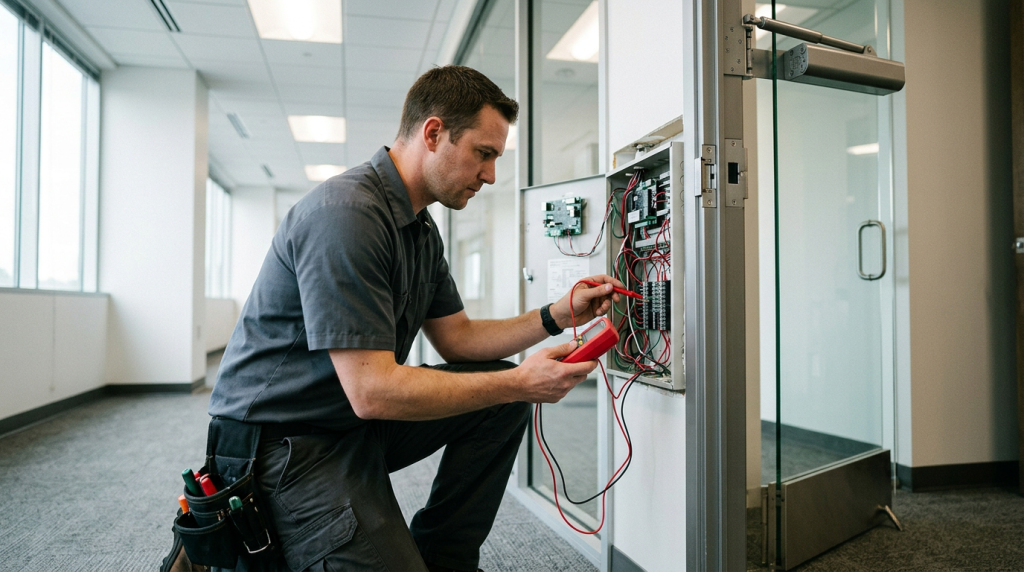
A systematic diagnostic sequence, reader to controller to hardware, is how most door faults get resolved without needless part swaps.
- Worn electric strikes and misaligned mounting plates that stop the latch from seating
- Failing power supplies and sagging low-voltage output that reset readers mid-cycle
- Damaged, loose, or grounded wiring between the door and the controller
- Outdated firmware, plus unmapped or expired credentials that deny valid entries
- Humidity, dust, and heat damage at readers and controller boards in older buildings
- Broken request-to-exit buttons and drifted door position contacts from sagging frames
Caveat
Decision Point: When a Warning Sign Becomes Urgent
- Treat any door that will not unlock, or will not secure, as an urgent finding rather than a backlog ticket.
- Stop troubleshooting at the door itself once egress is affected, and call for a supervised hardware inspection.
- A verified delayed-egress or fail-safe fault can carry both safety and liability consequences.
What Order Should Repairs Follow?
Start at the panel and work outward: confirm the controller is energized, verify the reader is reporting credentials, test the credential, inspect the electric lock and strike, then judge the door opening. Any access system repair in St. Louis that skips that order tends to trade one symptom for another, because each downstream part depends on the one before it. A reader that looks dead is often a power or controller fault, and a lock that seems stuck is frequently a misaligned door rather than a failed magnet. Commercial Safe & Lock follows this sequence on service calls so components are replaced for a documented reason rather than by guesswork, which limits unnecessary parts spending and repeat callbacks for the facility manager. Expect the work to be logged step by step, because that record is what shows the door is both secure and legal to use.
Why Does the Egress Check Come First?
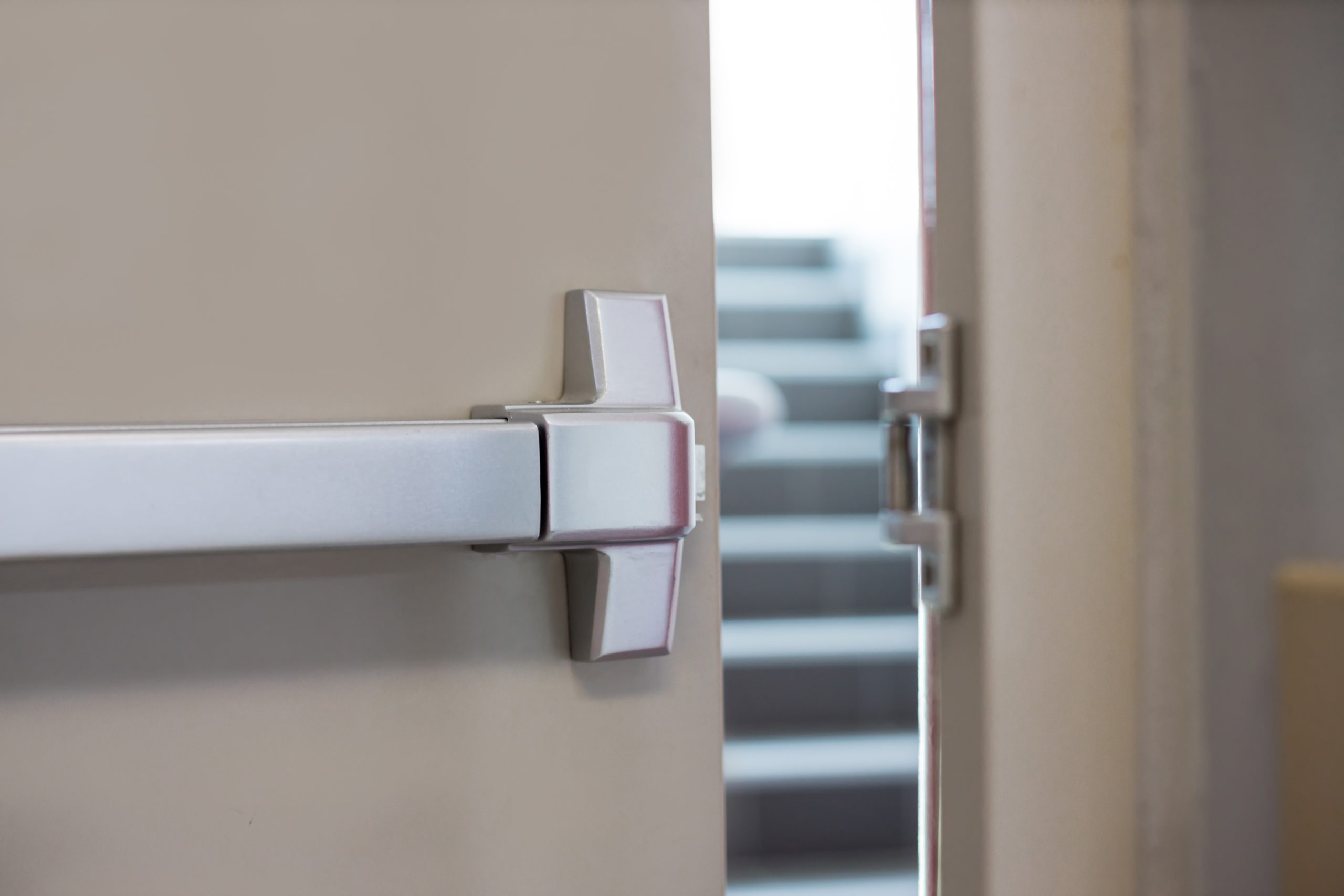
The life-safety check drives every other decision, because a door that secures a room but traps an exiting occupant is a failed assembly regardless of how well the badge reads. The International Code Council’s coverage of electrical locking provisions points to IBC sections 1010.1.9.7 through 1010.1.9.10 for the locking systems the code allows on doors in the means of egress. In practice, the exit-side hardware and the credential-side locking are two separate failures: a door can pass a badge test and still not release when someone walks out. So the sequence includes request-to-exit operation, the fail-safe or fail-secure behavior when power drops, and any monitoring or alarm interlock that must report. Confirm those before approving a parts order.
How Do You Verify the Repair?
Verification is a step of its own, not a signature on a work order. Cycle the door repeatedly, test each credential type the site actually issues, watch the strike and latch under real swing speed, and confirm the controller logs the event with the correct time and door identity. Facilities that issue PIV or other federally managed credentials should expect a documented test sequence, since the FIPS 201 Evaluation Program’s PACS test requirements identify the functional requirements performed on physical access control systems submitted for evaluation. That evidence is what separates a completed access system repair in St. Louis from a temporary workaround, and it gives the next technician facts instead of assumptions.
- Confirm power and controller health first: check the supply, the panel status indicators, and any active trouble condition before touching hardware.
- Trace the signal path from reader to controller, and prove the reader is actually reporting credentials rather than sitting offline.
- Test credentials one type at a time, including card, fob, mobile credential, and visitor badge, so a database problem is not mistaken for failed hardware.
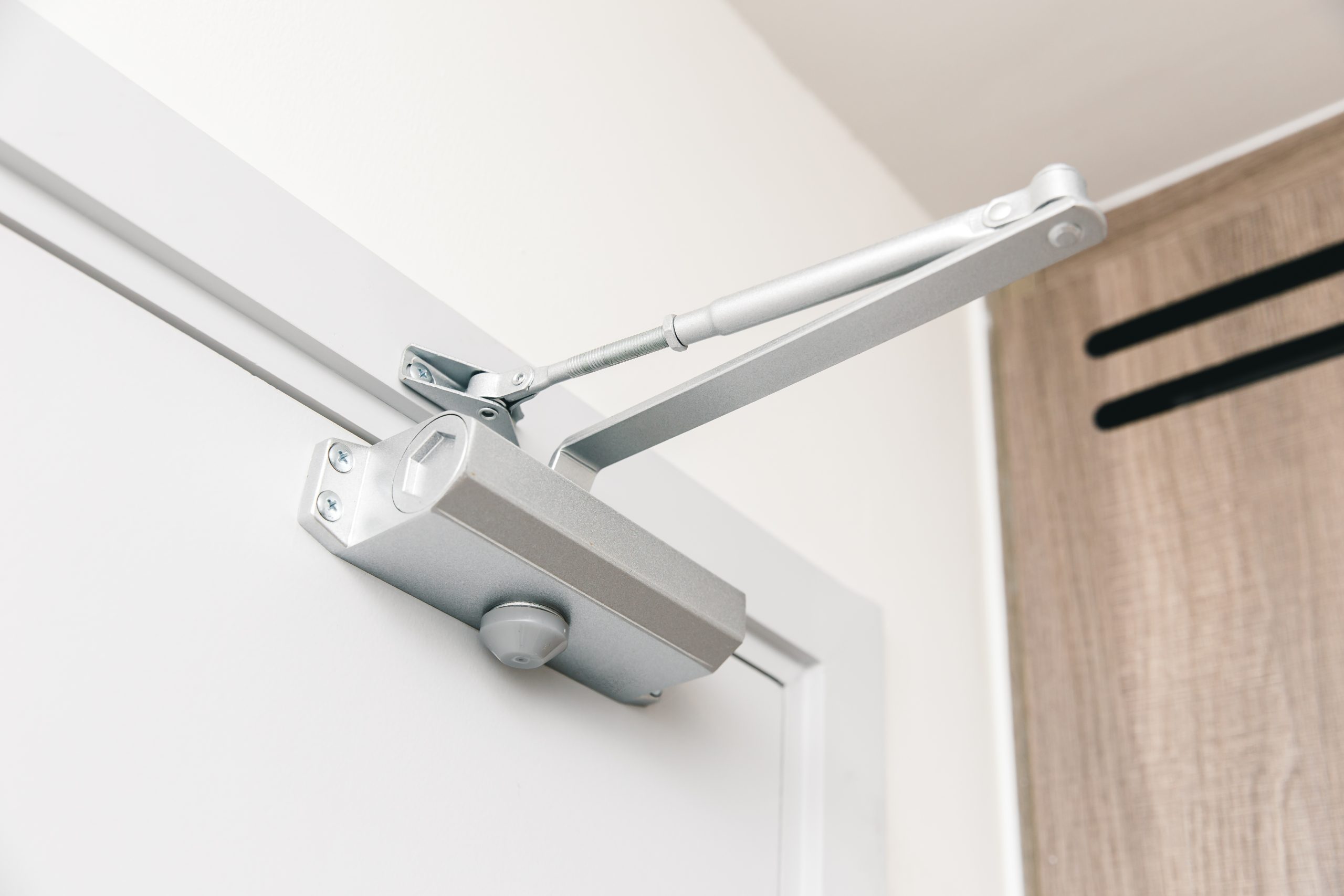
- Exercise the egress side: press request-to-exit, open the door after simulated power loss, and confirm the closer and latch operate cleanly.
- Document each result, including the component that failed, the release behavior you observed, and anything you adjusted or replaced.
Neutral
Rule of Thumb: Set the Sequence Before You Order Parts
- Sequence outranks parts: a swap that jumps ahead of the diagnosis usually creates a second symptom to chase.
- Never close a job with the credential side working and the egress side untested.
- Write down what passed, what failed, and what changed, so the next trouble call starts from evidence rather than memory.
Which Repair Option Fits Your Access System?
Compare three realistic paths before you commit: component-level repair of a failed reader, electrified lock, or power supply; device replacement when hardware is obsolete; or a scheduled maintenance agreement that catches faults early. Most managers weighing access system repair in St. Louis find that one faulty device is typically a smaller expense than replacing a whole panel, so diagnosis drives the decision more than system age. Tech Electronics, a regional integrator, designs, installs, and supports access control systems in St. Louis that help organizations secure facilities, manage access efficiently, and scale as needs evolve. Ongoing support, then, is a normal part of owning such a system, not an exotic add-on. If credentials still validate and only one opening misbehaves, repair that device first. Replace it when parts are discontinued, and reserve a full upgrade for a system that no longer scales with your site or staffing. Ask for a written scope before work begins.
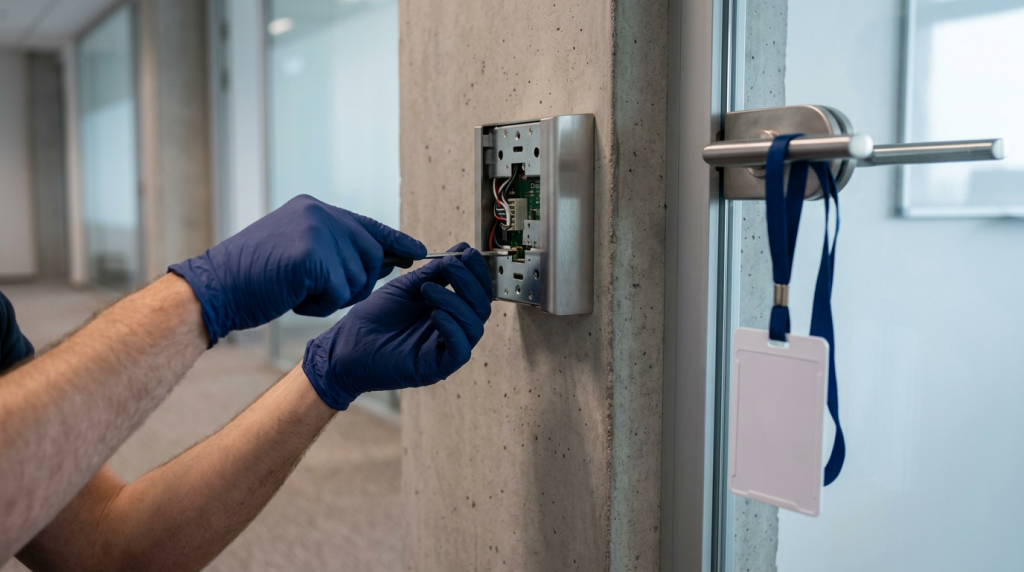
A technician works on the mounting plate of a card reader at a controlled commercial entrance.
Four repair options and alternatives for a St. Louis access control system, compared by trigger, scope, and the evidence behind each choice.
| Repair Option | Best For | Typical Scope | Why It Works |
| Device-level repair | One failed reader, electrified lock, or power supply | 1 opening; existing wiring and stored credentials retained | Smallest intervention when the other doors still validate normally |
| Device replacement | Discontinued, damaged, or vandalized hardware | 1 new unit matched to the existing panel capacity | Recovers the door without reprogramming every credential on file |
| Scheduled maintenance and testing | Sites running multiple controlled openings | Recurring planned visits instead of 1 emergency breakdown call | Catches worn strike plates and tired power supplies before a lockout |
| Full system upgrade | Panels that no longer scale with site growth | Whole-panel: new controllers, readers, and door hardware at all openings | Vendors describe solutions built for reliability in any commercial environment, per a St. Louis integrator |
Ready to Fix It Right the First Time
Access control repair in St. Louis should cover the whole door, not just the failed part, so our certified technicians match electrified hardware to the ICC code guidance on electrical locking systems in the means of egress. Commercial Safe & Lock has been family-owned since 1995, treating locks, doors, and access control as one job, with 24/7 emergency service and a satisfaction guarantee. Tell us where access is failing, and we will map the repair in plain terms.
Commercial Safe & Lock behaves as a one-stop security partner, assigning certified technicians who service locks, doors, and access hardware together, so the fix addresses the cause rather than the symptom.
You can see how we describe our quote and service process on our FAQ page.
Commercial Safe & Lock applies the same problem-solving discipline to doors and hardware, backed by family ownership since 1995, professionally trained technicians, 24/7 emergency response, and free quotes.
- Commercial Safe & Lock answers emergency door and hardware calls in addition to scheduled access system repair in St. Louis.
Info
Quick Facts
- 1995 – Family-owned and operated since
- 31 – Years serving commercial clients
- 24/7 – Emergency door and hardware response
- Free – Quote for commercial work
Frequently Asked Questions
How long does access system repair in St. Louis usually take?
A: The cause sets the clock. A reader that stops reading credentials, a worn strike plate, or a failed power supply can often be corrected during one visit. A door leaf that has sagged out of alignment, wiring damage on a run between buildings, or a controller that has to be reprogrammed or replaced takes longer, because the mechanical fix and the electronics fix have to happen in the right order. Note which doors fail, what time of day, and whether the reader lights or beeps before anyone is dispatched, and the diagnosis starts from better evidence.
Why does my access control door unlock on its own?
A: Random unlocking usually traces back to power, wiring, or operating mode. Electrified hardware is specified either fail safe, meaning it releases when power drops, or fail secure, meaning it stays locked. If a door swings open during a brownout or as a power supply begins to fail, the hardware may simply be set to the mode you did not expect. Intermittent signal on a long or damaged wire run, a stuck relay output on the controller, and a hold-open command or schedule left on in the software can produce the same symptom, so check the event log before you touch the hardware.
What are the first warning signs that a controlled door needs attention?
A: Small inconsistencies come first: a credential that reads on one attempt and not the next, a reader that flashes the wrong color, a door that needs two tries to latch, or a hold-door alarm that sounds more often than it used to. The door hardware warns you too. A sagging leaf, a latch rubbing the strike, and a closer that slams all stress electric locks and sensors until the electronics give out. Unexplained entries in the access log, or a panel reporting a zone trouble, are the system flagging the same underlying problem from the other side.
Are there code rules about locking doors that have access control?
A: Yes, and egress is the part facility managers most often get wrong. The 2024 editions of the International Building Code and the International Fire Code revised the monitored or recorded egress requirements to address doors with access control systems, so locking decisions on an exit door are a code question, not only a security preference. Adopted editions vary by jurisdiction, so ask which edition your local building department enforces before you specify a locking mode, a delayed egress setup, or a record-on-exit arrangement.
Should I repair the system or replace the whole thing?
A: Repair first when the failed components are still supported and the door hardware is sound. Replacement becomes the better use of money when controllers or readers are old enough that parts, firmware, or programming software are hard to find, when the same wiring fault keeps returning, or when your access policy has outgrown what the platform can enforce. Run one practical test: compare the quote to fix the current door set against a phased upgrade, and ask whether the existing system can still produce usable audit logs for the next several years.
How often should an access control system be tested or maintained?
A: No single interval fits every building, so set the schedule from your own risk review rather than a rule of thumb. Security trade bodies publish guidance for this work, including ASIS International’s access control benchmarks, and many facility teams test locks, readers, egress behavior, and power backup as part of a documented routine instead of waiting for a failure. Whatever cadence you choose, make sure whoever performs it records what was tested and what failed on each door, not just a pass mark for the panel.
Can I get emergency access system repair in St. Louis when a door is stuck open or locked?
A: Yes. A door that will not secure after hours is an emergency, not a routine maintenance item, because it affects both building security and the safe movement of people. Commercial Safe & Lock provides 24/7 emergency service and free quotes, backed by professionally trained and certified technicians and a satisfaction guarantee, and the company has been family-owned and operated since 1995. When you call, describe the failure mode (locked, unlocked, or intermittent), the door location, and what the reader does, and ask whether the visit includes a written diagnosis so the follow-up work is not quoted blind.