When a business’s security fails, the impact is immediate—and costly. A lockout delays your opening, a compromised entry point puts employees and inventory at risk, and a malfunctioning vault lock can bring operations to a standstill. These aren’t minor inconveniences—they’re disruptions that demand fast, reliable solutions.
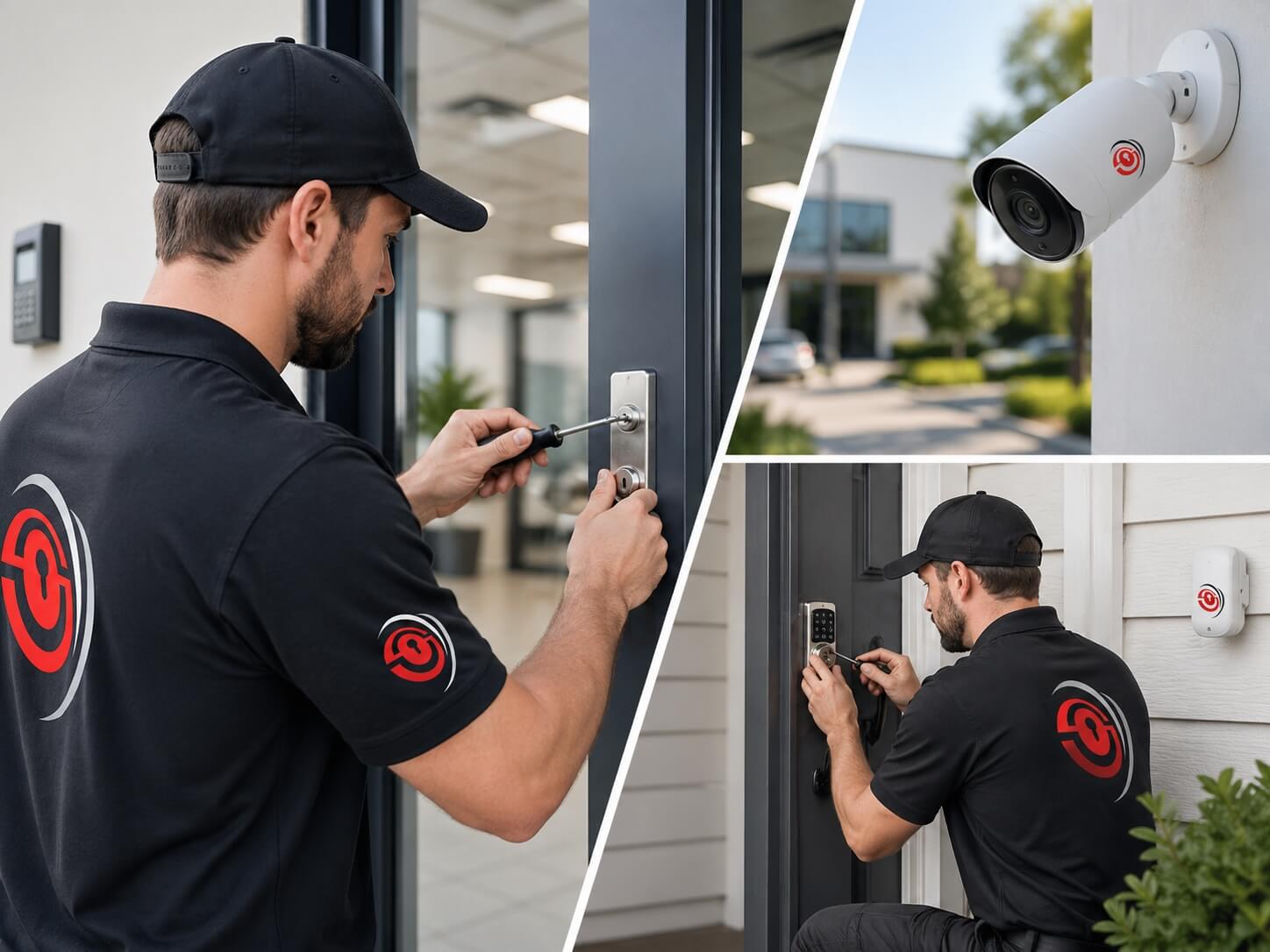
At Commercial Safe and Lock, we’ve been solving these problems for businesses across St. Louis, Jefferson County, and the surrounding region since 1995. Our commercial locksmith and security services cover everything you need to stay protected and operational, with certified technicians delivering precise workmanship and dependable results on every project.
One of our most requested commercial projects is the design and installation of perimeter security gates for warehouses, parking facilities, corporate campuses, and light-industrial sites. Done right, a security gate does three things at once — it controls who gets in, it deters anyone thinking about testing the property, and it looks professional enough to set the tone for the business inside.
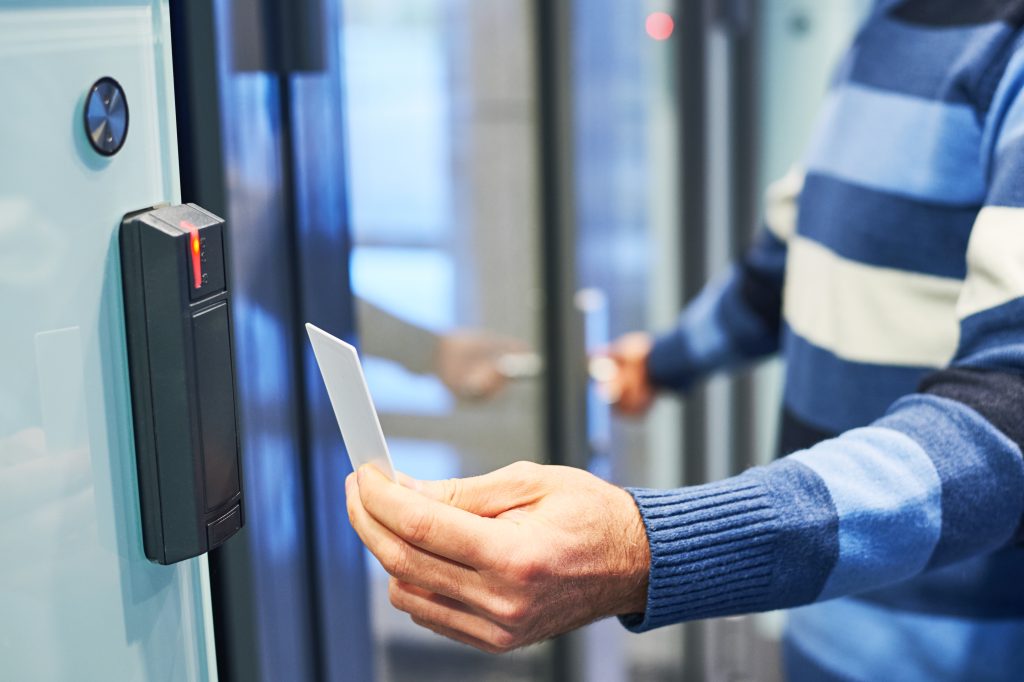
Our installations typically combine a commercial-grade gate operator (hydraulic for heavy cycling, electromechanical for quieter, lower-maintenance sites) with a layered access control stack: proximity cards, keypads, mobile credentials, and in some cases license plate recognition cameras for fleet and vendor traffic. Every system we install is sized to the real usage pattern of the property, not a spec sheet — gate weight, daily cycle count, exposure to weather, and required opening speed all factor into what we recommend.
Safety is non-negotiable on these builds. Every gate we commission includes photo-eye obstruction detection that stops and reverses the gate the instant something crosses its path, an emergency release so fire and EMS can get through when it counts, and programmable auto-close timers so the property never gets left open because somebody forgot. On the reporting side, the access control head-end logs every entry and exit, giving owners a clean audit trail for payroll verification, incident review, and compliance.
We install sliding gates where driveway depth is tight, swing gates where the property has room to show off a proper entrance, and vertical lift gates for sites where neither of the first two will fit. The right answer is almost always site-specific, which is why we start with a walk-through instead of a quote.
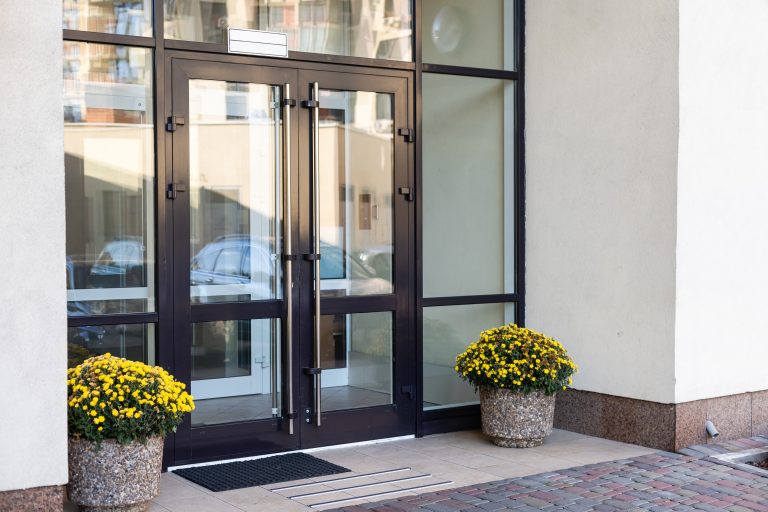
One of the most rewarding installations we’ve done in recent years was a ballistic rated glass entryway for a local jeweler. High-value retail is a category where the security design has to do something unusual — it has to be genuinely strong, and it has to look beautiful. Nobody shopping for an engagement ring wants to walk into what feels like a bunker.
The entry system we installed delivers both. The glass itself is rated to stop handgun rounds, the framing is reinforced to match, and from the customer’s side of the counter the storefront reads as clean, modern, and welcoming — exactly the way a fine jewelry store should feel. Projects like this are a good reminder that “security” and “design” aren’t opposites. With the right products and the right install, they’re the same conversation.
Summer is our busiest season for residential security upgrades, and it’s not a coincidence. Most home burglaries happen in broad daylight — roughly between 6 a.m. and 6 p.m. — when the neighborhood is quietest, school is out, and working families are nowhere near the house. Add vacations, pool days, and the long list of reasons a front door gets left unlocked “just for a minute,” and the risk profile of a normal summer week ends up higher than most people think.
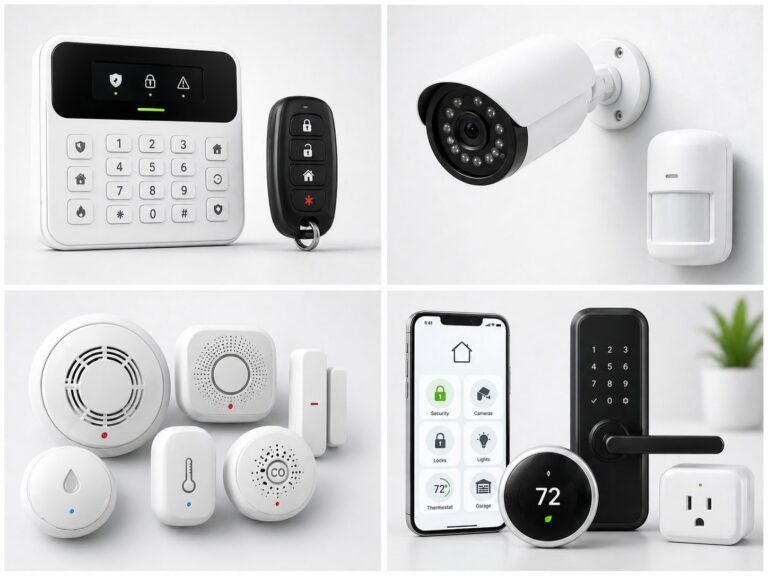
The projects we tackle heading into summer tend to cluster around a few simple goals: make the home look lived-in even when it isn’t, eliminate the easy entry points, and give the homeowner real eyes on the property while they’re away. That usually means rekeying locks the homeowner isn’t 100% sure about (especially after a recent move, a contractor job, or a lost keyring), installing smart locks with time-limited codes for house sitters and lawn crews, setting exterior lights on motion or schedule, and adding a camera or two at the doors that actually matter. None of these projects are glamorous, but every one of them shortens the list of houses on the block that look like an easy target.Summer is our busiest season for residential security upgrades, and it’s not a coincidence. Most home burglaries happen in broad daylight — roughly between 6 a.m. and 6 p.m. — when the neighborhood is quietest, school is out, and working families are nowhere near the house. Add vacations, pool days, and the long list of reasons a front door gets left unlocked “just for a minute,” and the risk profile of a normal summer week ends up higher than most people think.
The projects we tackle heading into summer tend to cluster around a few simple goals: make the home look lived-in even when it isn’t, eliminate the easy entry points, and give the homeowner real eyes on the property while they’re away. That usually means rekeying locks the homeowner isn’t 100% sure about (especially after a recent move, a contractor job, or a lost keyring), installing smart locks with time-limited codes for house sitters and lawn crews, setting exterior lights on motion or schedule, and adding a camera or two at the doors that actually matter. None of these projects are glamorous, but every one of them shortens the list of houses on the block that look like an easy target.
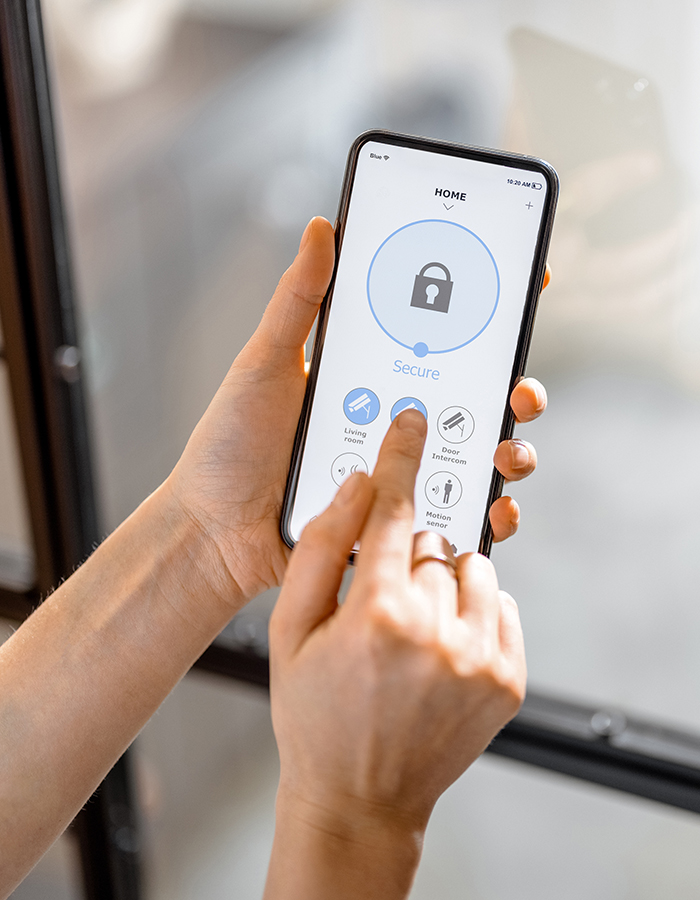
“Did I lock the front door? Did I close the garage? Did I actually set the alarm before I left?” We hear some version of that question from homeowners every week, and the answer we give now is very different from the answer we would have given ten years ago. Modern residential access control lets you check — and fix — all of it from your phone, from anywhere with a signal.
A typical connected home project for us pulls together smart deadbolts, a Wi-Fi-enabled garage door opener, a monitored alarm panel, and a video doorbell or camera package, all tied into a single app. From one screen, the homeowner can lock up after a kid runs out the door without their key, let a dog walker in on a specific schedule, watch a package delivery happen in real time, and get a push notification the second a door opens when nobody should be home.
The piece we pay the most attention to, though, is the part a lot of installers skip: getting the hardware right underneath the “smart.” A connected lock is still a lock. If the door frame is soft, the strike plate is shallow, or the bolt throw is short, no app in the world is going to keep the door shut against a determined kick. We reinforce the physical door first, then layer the smart features on top.
The commercial security industry evolves constantly. New access control platforms, updated door hardware standards, and changing compliance requirements mean that a technician’s education is never finished. Our team receives continuous training and certification to stay current.
A lock installed even slightly out of tolerance wears prematurely and creates security gaps that are invisible until they become a problem. We install everything to spec and verify function before we leave every job site.
Most commercial security projects involve more than one system. A door replacement might also require updated lock hardware and electric strike integration. An access control upgrade might touch multiple entry points across a large facility. Because we work across all of these disciplines, we coordinate the full project rather than handing pieces off to separate vendors.
We provide clear quotes before work begins. You will not see the price change between estimate and invoice.
Commercial security emergencies happen outside business hours with frustrating regularity. Our emergency line is staffed around the clock by technicians who understand commercial hardware and can respond immediately. Contact our emergency line any time.