By Patrick Duncan | Commercial Safe & Lock
Table of Contents
- Why Door Closer Repair in STL Matters
- What Causes a Door Closer to Fail?
- Get Your Door Closers Fixed Right
- Frequently Asked Questions
Key Takeaways
- A commercial entry that never reaches its strike has lost more than convenience, because the latched state is exactly what monitored access hardware is supposed to confirm.
- Objective width, egress, and latching figures let facility managers judge whether a closer needs adjustment, a rebuild, or replacement instead of guessing from how the door feels.
- A door that suddenly feels heavy to push is a hardware symptom worth chasing, not a nuisance to tolerate, because it often means the closer or the frame has drifted out of adjustment.
Why Door Closer Repair in STL Matters
Door closer repair in STL refers to adjusting, rebuilding, or replacing the hydraulic closers that swing commercial doors shut and drive the latch home across St. Louis, Missouri. Closers set the speed and force of a swinging leaf. When one wears out, an entry can slam, stop short of the strike, sit ajar, or leave the access control record mismatched.
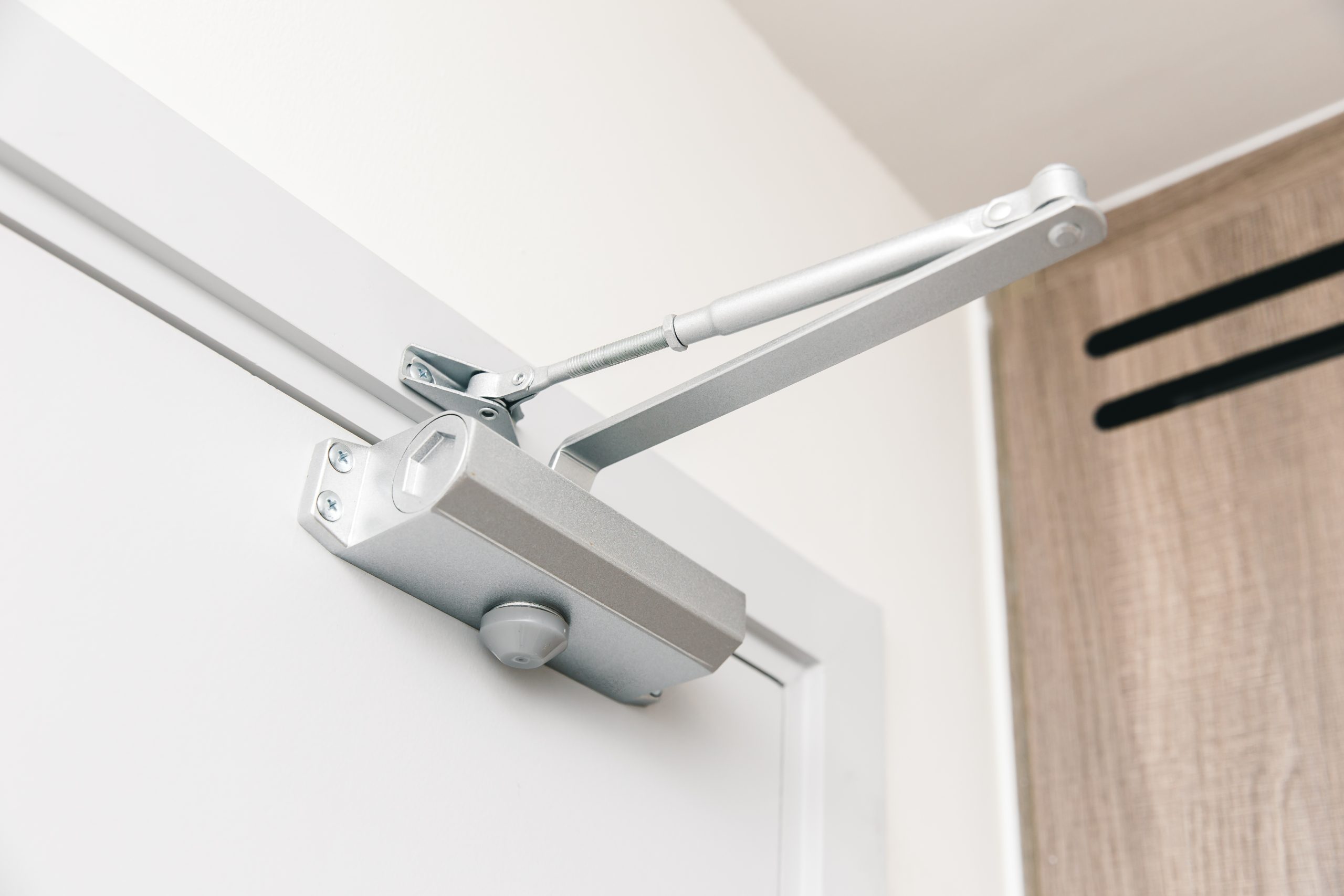
A door closer is the cylinder mounted above most commercial entrances, and its job is small but structural: it meters the swing, then returns the leaf to the frame and drives the latch bolt into the strike on every cycle. That one action keeps an opening latched, monitored, and legible to the people accountable for it. The Door and Hardware Institute describes controlled openings as ones that are securely latched and locked, and states that monitoring must cover door position and latch position. A leaking or badly adjusted closer cannot repeat that signal, so a card reader or alarm panel can report an opening as secured while the door stands ajar.
Egress is the second pressure point. Per OSHA’s exit route rule, an exit access must be at least 28 inches (71.1 cm) wide at all points, and employees must be able to open an exit route door from the inside at all times without keys, tools, or special knowledge. A closer set too stiff turns a routine push into a shoulder check. Accessibility is the third: the U.S. Access Board states that the minimum 36 inch continuous clear width of accessible routes can reduce to 32 inches at doorways, for a maximum distance of 24 inches. A leaf that sags or is propped open crowds that allowance. Cost and scope follow from all three, since a quote that ignores frame condition, arm type, and the code role of the opening tends to miss.
- Returns the leaf to the frame without a shove, so an opening is never left ajar after traffic.
- Drives the latch bolt into the strike, which is the position monitored hardware is expected to report.
- Meters swing speed so the door does not slam into the frame or pinch a hand.
- Preserves free egress, because the OSHA exit route standard states plainly that an exit door must be unlocked.
- Keeps the accessibility envelope intact, since door requirements sit in Section 404 Doors, Doorways, and Gates of the standards the Justice Department issued on September 15, 2010.
- Feeds rated-door paperwork, since the DHI inspector program supports an annual fire and egress door inspection initiative.
Walk the openings before you price the closer
- Decision point: walk the openings before you price the closer.
- Most entries drift gradually, so a door by door log of closer model, arm type, and measured gap shows whether adjustment, a rebuild, or a replacement unit is the shorter path.
- Commercial Safe & Lock, a family-owned commercial door and hardware company in St. Louis, Missouri since 1995, begins with that inspection and offers free quotes.
- Benchmark each opening against a documented figure first.
- A closer that cannot meet a stated width, egress, or latching benchmark is a service call, not a housekeeping item.
Documented benchmarks behind the four jobs a commercial door closer carries, the failure sign each one produces at an entry, and the first step a technician takes at that opening
| Closer duty | Documented benchmark | Failure sign in service | First step at the opening |
| Closing and latching on monitored openings | Under DHI security levels, Level 3 openings are securely latched, locked, and swing out | Leaf stops short of the strike while the panel still reads secured | Confirm closer size and arm type, then adjust or rebuild before quoting a new unit |
| Clear width at the doorway | Access Board route widths allow 36 inch routes to reduce to 32 inches at doorways for a maximum distance of 24 inches | A sagging or wedged leaf crowds the 32 inch allowance | Measure the clear opening, not the face of the frame |
| Free egress from the inside | The OSHA exit access rule sets exit access at least 28 inches (71.1 cm) wide at all points | A stiff closer turns a normal push into a shoulder check | Test the door from both sides before blaming the hardware |
| Rated door paperwork | The CFDAI inspector program supports an annual fire and egress door inspection initiative, and its course CE1701 is a code update for NFPA80 Fire Doors and Other Opening Protectives | Adjustment drift goes undocumented between surveys | Log closer model, closer size, and the date each opening was last checked |
What Causes a Door Closer to Fail?
Worn rod seals that bleed hydraulic fluid, a fatigued spring, a worn arm shoe, tampered adjustment screws, and frame sag that mimics hardware failure cause most failures. A search for “door closer repair stl” usually says swap the unit, but diagnose first.
Hinge wear, a dropped leaf, and a loose hollow metal frame reproduce every closer symptom, so rule those out with our guide to commercial door frame repair before condemning hardware. Push effort matters: the ADA door opening force guide sets a maximum 5 lbf opening force for accessible doors and gates, with exceptions for fire doors and exterior hinged doors. At Commercial Safe & Lock, certified technicians on our commercial door repair and installation team start with these checks for entries in St. Charles County.
Quick Facts
- 5 lbf – Maximum opening force for accessible doors and gates, per the U.S. Access Board guide to the ADA Standards
- 5 seconds – Minimum closer travel from 90 degrees to 12 degrees listed in the same Access Board guide, a benchmark when checking sweep speed
- 31 years – Length of time Commercial Safe & Lock has served St. Louis area businesses, family owned since 1995
- 24/7 – Emergency availability when an entry door will not close or latch
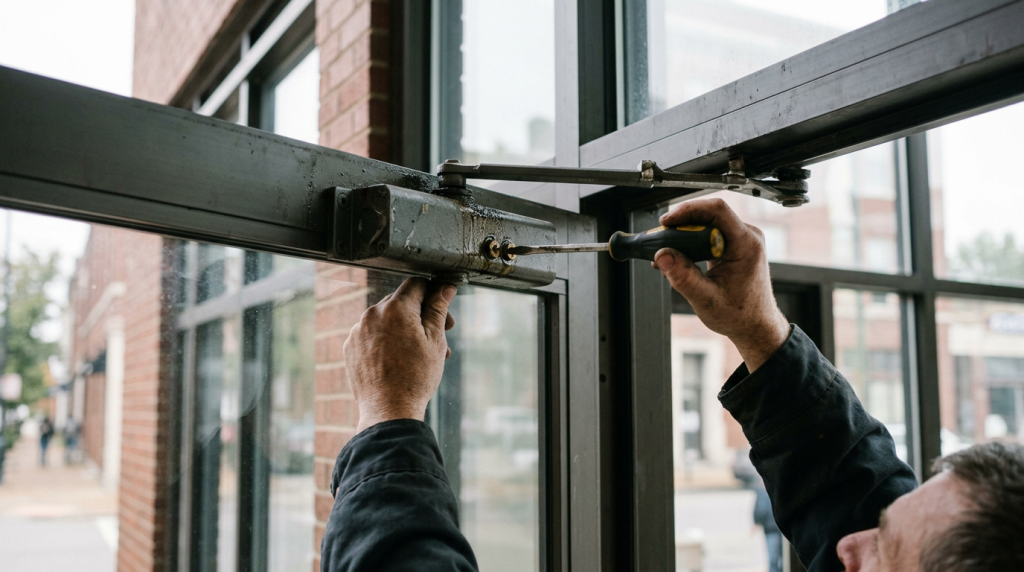
A closer that slams or stops short usually points to fluid loss at the rod seal before it points to a broken spring.
Get Your Door Closers Fixed Right
One call to Commercial Safe & Lock sends a certified technician for your closer and the rest of your commercial door installation and repair needs. If your search started as ‘door closer repair STL,’ Request a quote and our 24/7 service will schedule the visit.
Frequently Asked Questions
Can a door closer be repaired, or must it be replaced?
A: Many closer complaints are metering problems, not broken units. A door that slams or stops short of the strike usually responds to correct sweep and latch settings. A sealed hydraulic closer that is actively leaking is generally replaced, since it has lost the fluid charge it needs to close the door.
What does commercial door closer repair cost?
A: Cost follows scope, not the brand name. An adjustment visit on a few doors is mostly labor, while a failed unit adds the closer plus the right size, grade, and mounting style for that door and frame. Door count, electric strikes, and after-hours access shift the number. In any door closer repair quote in STL, ask for parts and labor by door.
Why is my commercial door slamming or refusing to latch?
A: Two adjustments control that behavior. Sweep speed governs how the door travels toward the frame, and latch speed governs the stretch before the strike. If a hinge is worn or the door has dropped in the frame, an adjustment will not stay corrected, so hinges, strike, and gaps belong in the same call.
Does accessibility law decide how stiff a closer can be set?
A: A closer turned up so far that visitors must put real weight into the door invites complaints, and the edition of the ADA Standards that applies depends on the building’s history. The Justice Department notes that knowing whether the 1991 or the 2010 ADA Standards apply to buildings and facilities is important in determining if a facility complies with the ADA, so confirm which edition governs your opening.
Can I adjust a door closer myself?
A: The exposed sweep and latch screws are easy to turn, and on a busy entry that is also how a door ends up slamming into a wall or standing unlatched at closing. Internal spring and hydraulic work is a different job, the clearest reason to call a commercial door locksmith instead of a quick fix.
Is a door that will not latch urgent?
A: If an exterior door is your only secured opening and it will not latch after hours, treat it as urgent, not a morning work order. Commercial Safe & Lock routes calls like that through its 24-hour emergency service, and the lasting repair belongs with a locksmith for commercial doors, since one visit should cover hinges, strike, and access hardware.