By Patrick Duncan | Commercial Safe & Lock
Table of Contents
- How Do Apartment Access Control Systems Work?
- How Should You Plan a Building-Wide System?
- Get Expert Help Securing Your Property
- Frequently Asked Questions
Key Takeaways
- Electronic entry hardware shifts the cost of resident turnover from rekeying every common door to revoking one credential in the management software.
- Because each opening carries a different mix of security, life safety, and accessibility demands, credential type and power behavior should be decided door by door.
- Survey every shared door for frame, closer, and hinge wear first, because tired mechanical hardware tends to defeat new electronics before software ever does.
- Decide door by door whether the lock should release or hold when power fails, then centralize credentials on one dashboard and re-audit the user list at every turnover.
How Do Apartment Access Control Systems Work?
Using apartment access control systems, managers unlock doors for approved people only, trading shared metal keys for electronic credentials like key fobs, cards, or phone apps. A reader at each door checks the credential against a central list, then releases an electric strike or magnetic lock. Managers add or remove users, set schedules by door, and review entry logs without rekeying. For a property manager, the payoff is administrative: one move-out no longer means a technician turning cylinders at every common door. Commercial Safe & Lock treats each opening as its own decision, and a free quote starts with a walkthrough of the doors that matter most.
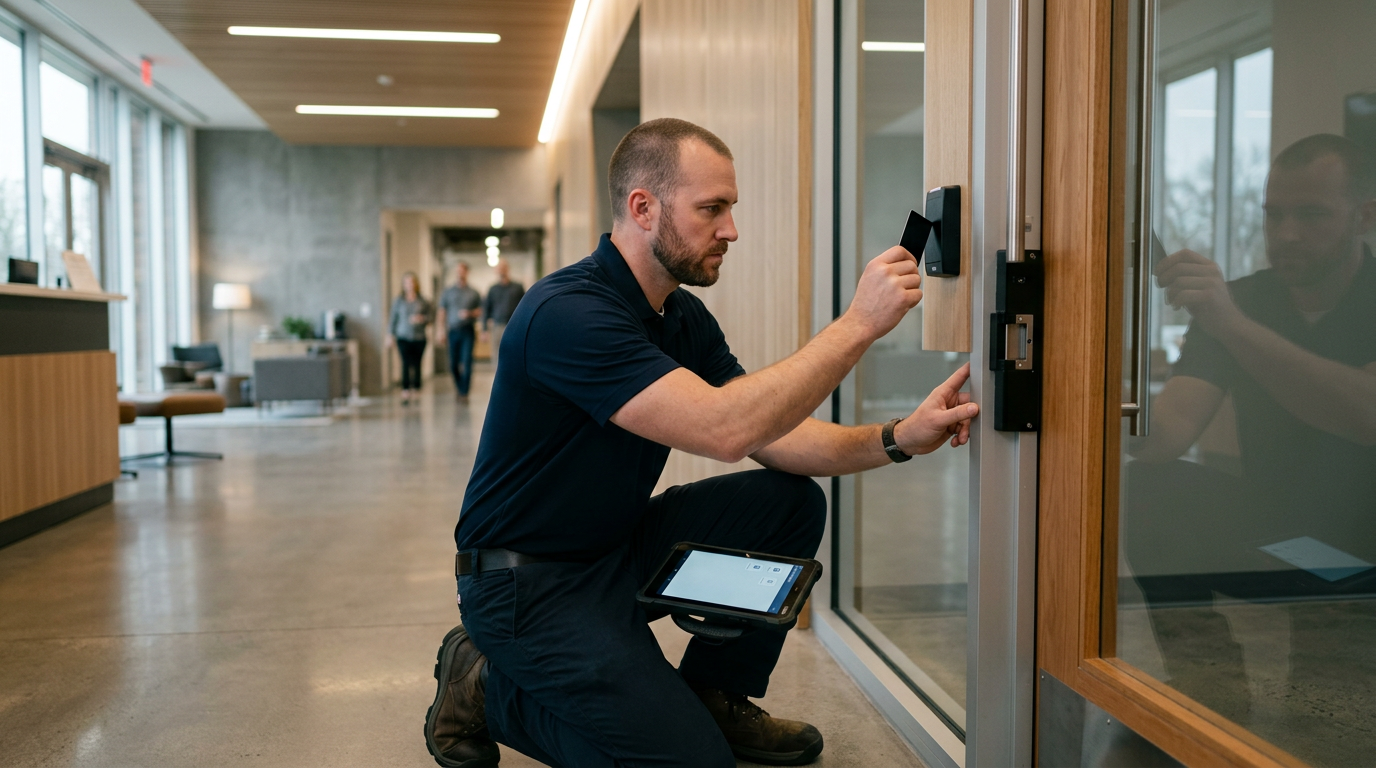
Every working setup follows the same chain of command. The reader captures the fob, card, phone credential, or code, passes it to a controller, and the controller confirms stored permissions before signaling the electric strike or magnetic lock to release. The NIH technical bulletin states that an electric strike replaces the mechanical strike in a lockset to electrically control access, and that fire-rated doors must use fail secure strikes under NFPA 80. Power loss decides the rest: fail safe hardware unlocks when electricity drops, while fail secure hardware stays locked. Locksmith Ledger advises that the access control objective for a door falls into three main categories, namely security, life safety, and accessibility. Lobby entry, pool gates, package rooms, fitness areas, and maintenance closets each land in a different category, so a site survey of the property’s openings should come before any hardware order.
- Reader: the door-side device that scans a fob, card, phone credential, or entered code.
- Controller: the board that stores permissions and decides whether the strike or maglock releases.
- Electric strike or magnetic lock: the electrified hardware that physically frees the door.
- Power supply with backup: keeps each entry behaving as programmed during an outage.
- Management software: where staff issue credentials, schedule doors, and pull entry logs.
Rule of Thumb for Choosing Credentials
- Fobs, cards, and mobile credentials are generally simple to deactivate in the software the moment one goes missing, which is why most managers keep them on lobby and amenity doors.
- PIN codes spread quickly among residents and vendors, so keypads usually fit low-traffic utility and maintenance closets where a shared code is a smaller risk.
- Work from the highest-traffic openings first: main entry and parking gates, then package rooms, pool gates, and fitness centers once those doors behave predictably.
Core components, credential options, and the code or specification thresholds that shape each entry door decision in a multifamily property.
| Component or Credential | Documented Figure or Code | Best Used For | Plan Around |
| Electrified door hardware | Elevator lobby exit access doors, added in the 2024 I-Codes as section 1010.2.14, call for fail safe electrified hardware, per Codes in Context | New construction and full lobby renovations where egress paths are reconfigured | Monitored or recorded egress requirements moved to section 1010.2.9 in the 2024 IBC and IFC editions |
| Egress locking systems | Four electrical locking systems are covered in ICC code sections 1010.1.9.7 through 1010.1.9.10 | Corridor, stairwell, and exit doors on the means-of-egress path | Each system may be paired with ingress control locking, but free egress still has to hold during an alarm |
| Credential interoperability | The FIPS 201 evaluation program runs functional requirements and test cases on physical access control systems at version 1.4.2 | Properties that want badge programs to work across readers and future hardware | Proprietary fob formats can fall outside a tested credential program, so confirm reader compatibility early |
How Should You Plan a Building-Wide System?
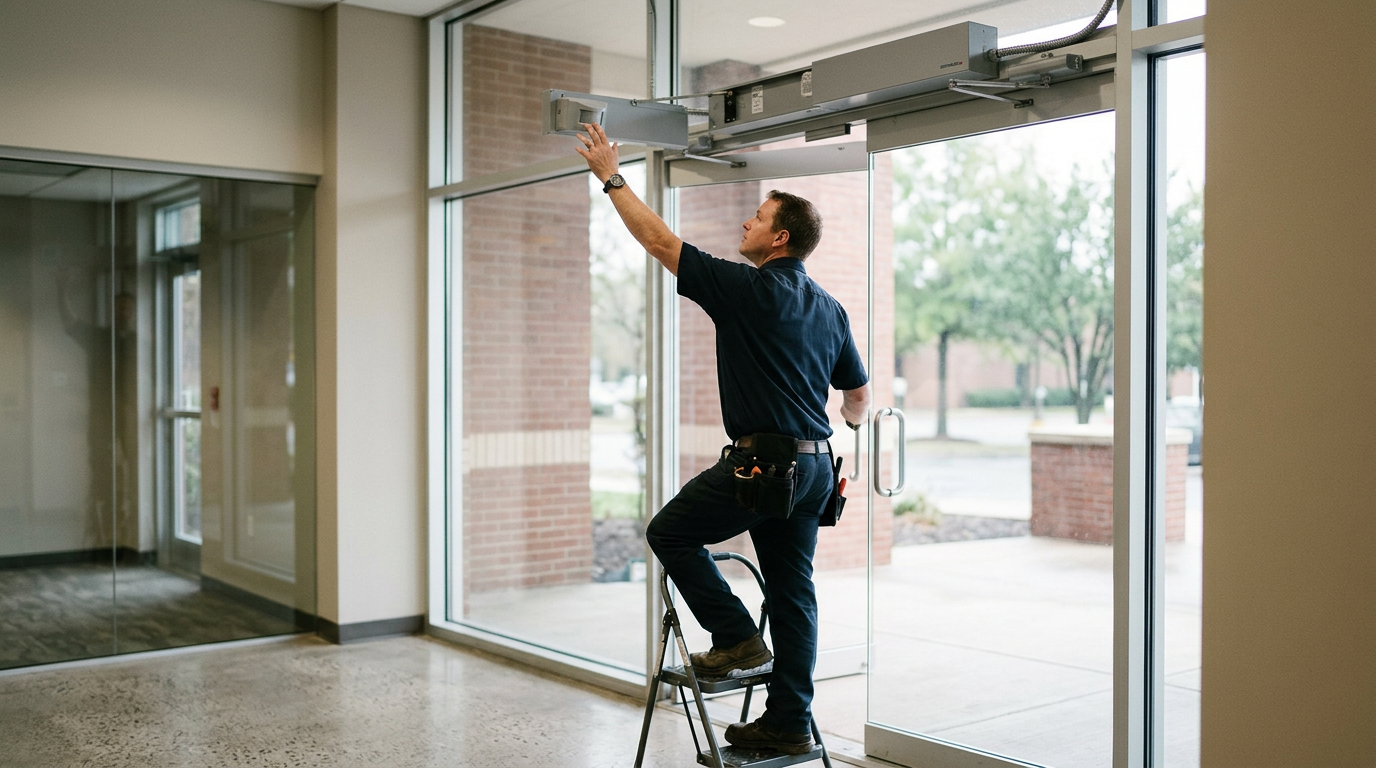
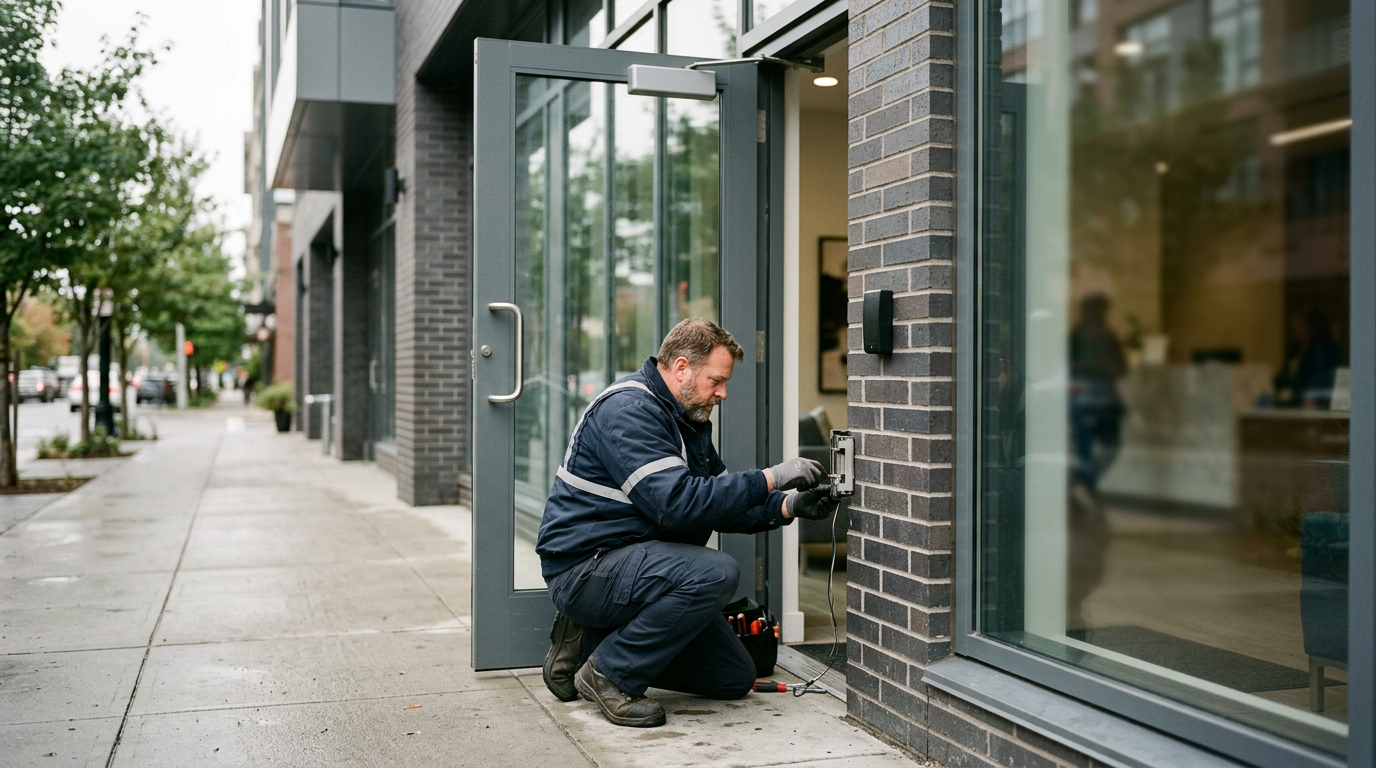
Property managers plan apartment access control systems by mapping every shared entry point, then matching each door to the correct lock, reader, and credential, with a documented survey first, code-aware lock selection second, centralized software third, and scheduled inspections last. Walk every door before you specify hardware. Note frame condition, closer function, and hinge wear, because worn door frames and closers defeat new electronics faster than any software glitch. Commercial Safe & Lock crews in St. Louis, St. Louis County, and St. Charles County often start with that same survey, then ask whether tired openings should route through storefront door repair before a reader is mounted. Label each opening for what the National Institutes of Health technical bulletin calls fail safe or fail secure behavior, meaning what the lock does when power drops, so stairwells and exit doors still let people leave freely during an outage while other openings stay locked. Choose cloud-based software when you manage more than one building, so one dashboard controls fobs, mobile keys, and intercom entry across every site. Finally, set the service rhythm: check readers, electric strikes, closers, and backup batteries on a calendar, and audit the user list at each lease turnover.
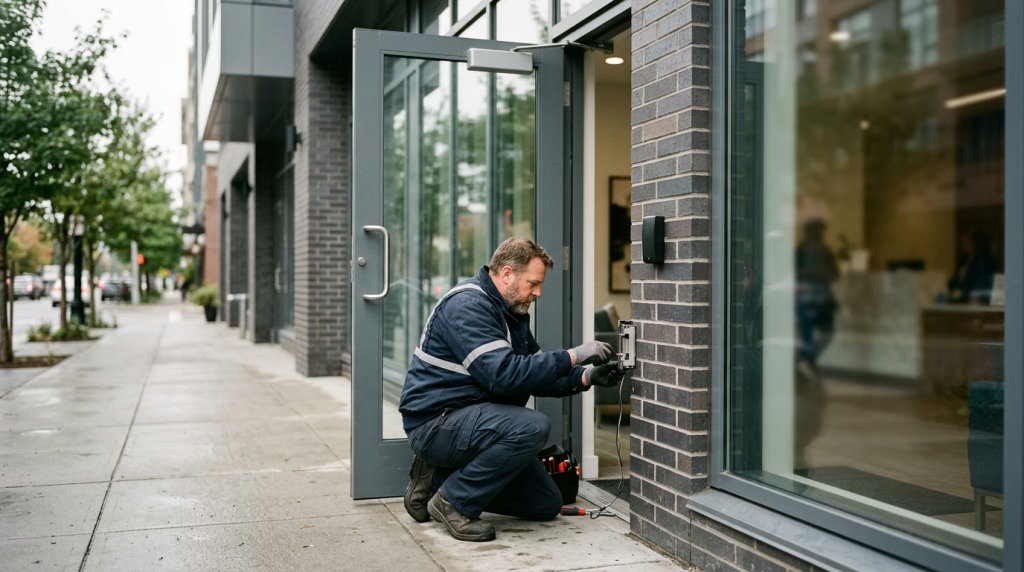
Frame, closer, and hinge condition decide whether an electrified lock will hold, so the door-by-door walk comes before any purchase.
Quick Facts
- 4 sections – International Building Code paragraphs covering electrical locking on egress doors, 1010.1.9.7 through 1010.1.9.10
- 31 years – Commercial Safe & Lock has been family-owned and operated since 1995
Get Expert Help Securing Your Property
Commercial Safe & Lock covers door repair, hardware, locksmithing, and access control as one vendor, so one team installs, services, and maintains your apartment access control systems without crews blaming each other. We install, service, and maintain your commercial door, hardware, and access control services around the objective each door needs. Free quotes and 24/7 emergency response come with certified technicians and a satisfaction guarantee. Request a free quote to get started.
Frequently Asked Questions
What drives the cost of apartment access control systems?
A: Four inputs move the number: how many doors are controlled, which reader sits at each opening, what lock hardware holds that door, and how the software is licensed and supported over time. A hardwired lobby controller and a gate reader are not the same job, and an opening that needs a new closer or an electrified lever takes on hardware before software enters the picture. Because those inputs repeat at every controlled door, a two-door courtyard entry and a full intercom build land far apart.
Can we retrofit access control onto the doors we already have?
A: Most commercial-grade openings already in place can be converted when the frame, the closer, and the strike are sound, since electrified locksets and electric strikes mount to hardware the door already carries. What blocks a retrofit is mechanical wear, not the electronics: a sagging frame, a tired closer, or a strike that no longer lines up. Identify the objective for the door before you compare product lines, because the reasons for controlling an entry fall into security, life safety, and accessibility. Worn hardware should be handled first, and that mechanical work sits with our key and lock services.
What happens to these doors during a power outage?
A: Which behavior you get is set at the hardware level, since a door’s fail safe or fail secure designation describes what happens when the controller fails or when power drops. Most electrified locksets release so the inside side stays free to exit, while a fail secure lock holds the outside side closed until power is applied. Backup power decides how long readers, controllers, and intercoms keep working through an outage, so match each setting to the door’s role: an exit path should never trap anyone, and a door facing an alley should not swing open unattended.
How do we remove access when a tenant moves out?
A: Access ends in the software, not at the cylinder. When a tenant moves out or a fob goes missing, deactivating that card, fob, or mobile credential removes entry at every controlled opening it reaches, which is the practical reason managers choose credential-based control over rekeying doors after each turnover. The mechanical backup still needs attention, because cores for staff and emergency access remain keyed. Close out those cylinders in the same visit as your lock and key work so the software side and the hardware side finish in step.
How long does an installation take?
A: Duration follows door count, hardware condition, and software choice, the same three inputs that drive cost. A controlled opening with sound hardware is typically a short install, while a property that needs new closers, conduit, or intercom wiring runs across several days, with programming and credential issuing left to the end. Ask for dates to be set at the walk-through, since a site survey is what turns a general range into a sequence your residents and staff can plan around.
Who should install and program the system?
A: Choose one provider for the door, the hardware, and the software, because a reader performs only as well as the alignment, strike, and wiring behind it. Commercial Safe & Lock is a family-owned security and locksmith company operating since 1995, with professionally trained and certified technicians and a satisfaction guarantee on the work. Whomever you hire, ask them to show door hardware experience alongside software training, then request a written quote per door before you buy any equipment.